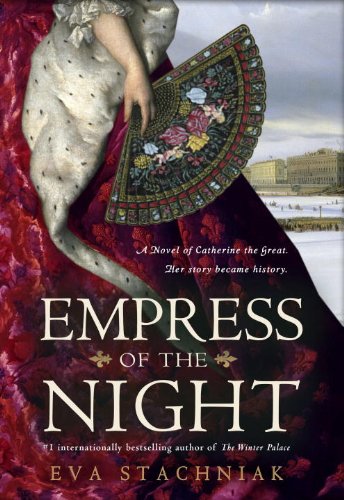
(from Goodreads)
This one is rather different. The book opens – as does each
section – with Catherine experiencing the stroke of which she died in 1796. The book reflects on her life – starting with
her arrival in Russia as Princess Sophie, the bride of the prospective tsar
Peter, accompanied by her manipulative mother. Structurally, it’s a series of
reflections on her life, focusing on the men who come and go, and get younger
as she gets older. I’m pretty familiar with the history and characters of this
period, but I must admit I did struggle at times with all the similar names – I
wish I’d realised that all the characters were set out at the back of my Kindle
ARC, and I do hope the publishers will put them up-front in the published
version. I must admit that this book really wasn’t for me – I prefer a
historical novel set against a well-researched background, which was why I enjoyed
The Winter Palace so much, and the focus here is wholly on Catherine herself. The
structure is fragmented, but that’s not a criticism – just a reason why a
character list and timeline would have been useful. I enjoyed reading it, and the
rich detail brought back memories of the locations I’d visited in their
historical context, but its appeal was really only because of my fascination
with Catherine – I wouldn’t really recommend it to a reader with a casual
interest.
My thanks to netgalley and publishers Random
House for the advance reading copy. Empress of the Night will be published in
hardcover by Bantam on 25th March 2014.
I’d additionally recommend an article by the author
that I found on the website Writing Historical Novels: it gives a fascinating
insight into the different
perspectives on Catherine as a ruler by Polish and other Western biographers, and
about her research. It raises the question "How did she manage to transform herself from a minor Prussian
princess who arrived in Moscow at 14 without a word of Russian at her disposal
into the powerful autocrat of All the Russias?" – which is one of the reasons why I
find Catherine so endlessly fascinating.
The Winter Palace sounds a good read. I do not know why I did not know before today that you had a blog. Now following you and will add your blog to my Book Review Blog Roll. :)
ReplyDeleteGood to have you with me Linda - I know we frequently like the same books, and yes, I would recommend The Winter Palace. Must add your book blog to my "blogs followed" list too!
ReplyDelete